Punk Kilt vs. Traditional Kilt: Understanding the Differences

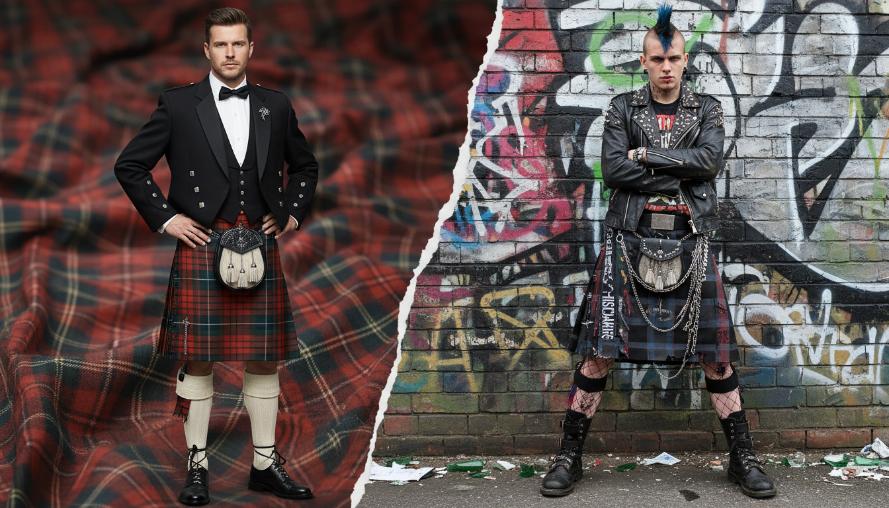
The kilt is a timeless piece of clothing with deep cultural roots in Scotland. Still, over time, it has been reinterpreted in various ways. One of the most intriguing evolutions of the kilt is the punk kilt. This fashion statement takes the traditional Scottish garment and gives it a rebellious twist. But how do the two styles differ, and what makes each unique?
In this blog, we will explore the traditional kilt and the punk kilt, comparing their histories, designs, cultural significance, and functionalities. Whether you’re drawn to the history and elegance of the traditional kilt or the raw, rebellious energy of the punk kilt, understanding both will help you decide which one aligns best with your personal style and the occasion.
Section 1: The Origins and History of the Kilt
A. Traditional Kilt: A Symbol of Scottish Heritage
The traditional kilt has its roots deeply embedded in Scottish culture. While its exact origins are debated, most historians agree that the modern kilt evolved from the Great Kilt (also known as the philabeg) worn in the 16th century. The Great Kilt was a full-length garment made from a single piece of woolen fabric, draped over the shoulder and fastened with a belt, which offered warmth and mobility. Over time, the kilt evolved into a more tailored garment, becoming what we recognize today as the modern Scottish kilt.
Traditionally worn by Highland Scots, the kilt became a symbol of national pride and identity. It was integral to Scottish military and cultural life, worn by soldiers in battle and at ceremonial events. The fabric used for traditional kilts, known as tartan, often represented different Scottish clans. The colors and patterns on the tartan were significant, with each clan having its own unique pattern. Kilts became associated with various events, including weddings, national celebrations, and Scottish festivals, playing a vital role in the country’s cultural fabric.
B. Punk Kilt: Rebellion and Individuality
The punk kilt emerged in the late 1970s as a response to the punk rock movement, which sought to rebel against mainstream culture, fashion, and societal norms. The punk scene, with its DIY ethos, anti-establishment sentiments, and raw energy, quickly adopted and reinterpreted the traditional kilt. Punk musicians and fans saw the kilt as a symbol that could be used to defy the conventions of both conventional Scottish heritage and the fashion industry.
The punk kilt was distressed, customized, and transformed. Rather than using wool and tartan, punk kilts were often made from materials like denim, leather, and faux fur. The once-formal garment evolved into a tool for self-expression, adorned with spikes, chains, zippers, and patches—reflecting the rebellious spirit of punk rock. Bands like the Sex Pistols and punk icons such as Sid Vicious helped solidify the punk kilt as an integral part of punk fashion, blending Scottish tradition with the anarchy of punk culture.
Section 2: Design and Aesthetic Differences
A. Traditional Kilt Design
The traditional kilt is characterized by several key features that have remained essentially unchanged for centuries:
- Pleats and Apron: The kilt is made from a long piece of tartan fabric that is pleated at the back, with the front apron (the flat piece of cloth) tucked in and fastened at the waist with a belt. The pleats allow for ease of movement and flexibility, particularly for activities such as dancing or marching.
- Tartan Pattern: One of the most distinctive features of the traditional kilt is the tartan pattern, which represents specific clans or regions in Scotland. Tartan is woven from wool, and each pattern is rich with meaning, signifying familial and historical ties.
- Accessories: Traditional kilts are often worn with a sporran (a small pouch worn at the front of the kilt), kilt hose (long socks), and a kilt belt. These accessories help complete the formal look. The kilt is typically paired with a jacket or waistcoat for formal occasions.
- Formal vs. Casual Use: The traditional kilt is designed for formal and ceremonial occasions, such as weddings, highland games, national events, and military parades. Although kilts have made their way into casual wear, they are still primarily associated with formal Scottish events.
B. Punk Kilt Design
The punk kilt is a drastic departure from the traditional design, focusing on raw expression, distressed materials, and a complete rejection of formal attire. Here are some of the design elements that define the punk kilt:
- Material Choice: Unlike the traditional wool tartan, the punk kilt is often made from denim, leather, or synthetic fabrics. These materials reflect the DIY culture of punk, which embraces unconventional choices and repurposed items.
- Customizations and Distressing: Punk kilts are often altered with spikes, studs, chains, and zippers to give them a more rugged, rebellious edge. Patches, graffiti, and band logos are also commonly added to reflect the wearer’s personal style and influence from the punk music scene.
- Asymmetry and Nontraditional Cuts: While traditional kilts have a structured, symmetrical design, the punk kilt often features asymmetrical cuts or irregular hems, giving it an intentionally unfinished look. It reflects the punk movement’s defiance of perfection and convention.
- Casual Wear: Punk kilts are designed for casual wear, often paired with streetwear or worn to concerts and festivals. They are less about formality and more about individual expression, freedom, and rebellion.
Section 3: Cultural Significance and Meaning
A. Traditional Kilt’s Cultural Significance
The traditional kilt holds a deep connection to Scottish heritage and identity. For centuries, it has been a symbol of national pride for Scots, representing their connection to the land, history, and their specific clan or region. The tartan pattern is the most iconic feature, as it identifies the wearer with their ancestral clan. Traditionally, the kilt was worn as part of the Scottish military uniform, symbolizing strength, unity, and Scottish resilience.
The kilt also plays a significant role in Scottish ceremonies and national celebrations. Events like Burns Night, St. Andrew’s Day, and Hogmanay (New Year’s Eve) often see men donning kilts to celebrate Scottish culture and tradition. The kilt is also commonly worn at Scottish weddings, where it is an integral part of the attire, particularly for the groom and his groomsmen.
B. Punk Kilt’s Cultural Meaning
In contrast, the punk kilt symbolizes rebellion and anti-establishment sentiments. The punk kilt emerged during the late 1970s, a time of significant growth in the punk rock movement. This movement was characterized by its defiance of mainstream culture, fashion, and societal norms. The punk kilt, therefore, can be seen as a cultural statement—a rejection of both traditional Scottish culture and the mainstream fashion industry.
Punk kilts also reflect the DIY ethos of the punk movement, where clothing is often customized and personalized to represent the wearer’s individual beliefs, influences, and creativity. The punk kilt, with its chains, patches, and spikes, speaks to a world where conformity is rejected, and personal identity is emphasized over tradition.
In this sense, the punk kilt doesn’t just represent Scottish heritage—it means the freedom to reinvent and transform anything, including cultural icons, into something new.
Section 4: Functionality and Practical Use
A. Traditional Kilt’s Functionality
The traditional kilt, although primarily designed for ceremonial and formal occasions, also has a practical side. The design of the kilt allows for comfort and mobility, which was especially useful for soldiers and Highlanders in battle. The pleats in the fabric give the wearer freedom of movement, whether for dancing, walking, or marching.
While still associated with formality, the kilt is also worn casually in some parts of Scotland and by tourists looking to embrace Scottish culture. It can be worn as a formal outfit for weddings or state occasions. Still, it has also been adapted to casual wear in specific contexts.
B. Punk Kilt’s Practical Use
The punk kilt, in contrast, is designed for comfort and functionality in casual settings. The materials used (like denim, leather, and synthetic fabrics) make the punk kilt more suitable for everyday wear. Punk kilts often have adjustable waistbands or zippers, making them more practical for different body types. The pockets, chains, and attachments make them both stylish and functional, perfect for concerts, festivals, and streetwear.
Because the punk kilt is less formal, it allows for a freer expression of personality. It is suited to situations where the wearer wants to stand out or make a statement.
Section 5: When to Wear Each Kilt
A. When to Wear the Traditional Kilt
- Weddings and Formal Events: The traditional kilt is commonly worn at Scottish weddings and formal celebrations, such as Burns Night.
- Ceremonial Occasions: It’s also worn in ceremonial settings, such as parades or military events.
- Cultural Festivals: Highland Games, St. Andrew’s Day, and other Scottish national holidays are the perfect occasions for wearing a traditional kilt.
B. When to Wear the Punk Kilt
- Concerts and Festivals: The punk kilt is ideal for punk concerts, festivals, and other events where you want to make a bold statement.
- Streetwear: Punk kilts seamlessly integrate into the world of street fashion, making them ideal for casual, rebellious looks.
- DIY Fashion Statements: Whether paired with a band tee, combat boots, or spiked accessories, the punk kilt works well in any situation where individuality and personal expression take priority.
Conclusion: Which Kilt Should You Choose?
Ultimately, whether you choose the traditional kilt or the punk kilt depends on your personal style, the occasion, and the cultural meaning you wish to express. The conventional kilt remains a symbol of Scottish heritage, representing pride, ceremony, and a connection to centuries-old traditions. It’s a garment that has stood the test of time and continues to be worn in formal and cultural contexts.
On the other hand, the punk kilt is a modern reimagining of the kilt, born out of rebellion and the punk movement’s anti-establishment ethos. It’s a fashion statement that embodies individuality, freedom, and creativity, ideal for those who want to express their unique style unconventionally.
So, whether you’re honoring Scottish heritage or making a bold, rebellious fashion statement, both kilts offer distinct ways to express yourself through clothing. The choice is yours!
FAQ’s:
The traditional kilt is a formal garment rooted in Scottish heritage, made from tartan wool and worn for ceremonial events, weddings, and national celebrations. The punk kilt, on the other hand, is a rebellious twist on the traditional kilt, made from materials such as denim, leather, and studs, reflecting the DIY and anti-establishment ethos of punk culture.
While the traditional kilt is typically worn at formal events, such as weddings or national celebrations, the punk kilt is generally more casual in style. However, you can still wear a punk kilt to a less traditional, more alternative or non-conformist wedding or event where a bold fashion statement is welcome.
Yes, punk kilts are designed to be more comfortable and practical for everyday wear. Made from denim, leather, and other flexible materials, they often feature adjustable waistbands and functional details, such as pockets, making them suitable for concerts, festivals, or casual street style.
Tartan patterns are deeply tied to Scottish clans and regions. Each tartan design symbolizes a specific clan’s identity and history, with certain colors and patterns representing different familial ties or historical events. The tartan is a key part of Scottish culture and is often worn as a symbol of national pride.
The traditional kilt is best worn at formal events, such as weddings, military ceremonies, or Scottish festivals like Burns Night. The punk kilt, however, is ideal for casual occasions, concerts, festivals, or as part of everyday street fashion, offering a more rebellious and personal style.