The Punk Kilt: A Bold Symbol of Rebellion

When you think of rebellion, what comes to mind? Leather jackets, chains, piercings, and spikes? What about the kilt—a traditional garment worn by proud Scots for centuries? Sounds like an odd pairing. But when punk rockers laid their hands on this piece of history, the kilt became something much more. It was no longer just a symbol of Scottish heritage; it transformed into an emblem of defiance, a bold statement, and a piece of anti-establishment rebellion.
The punk kilt is more than just a fashion trend. It’s a statement that challenges the status quo. It’s not simply about looking different; it’s about wearing your defiance proudly, loudly, and unapologetically. A punk kilt isn’t just about fabric—it’s a symbol of rebellion in every stitch.
Let’s dive deep into how the punk kilt came to be, how it came to symbolize rebellion, and why it’s still a statement piece today.
From Scottish Heritage to Punk’s Raw Edge: The Origins of the Punk Kilt
To understand the punk kilt, we need to explore where it all began: the traditional Scottish kilt.
A. The Scottish Kilt: A Symbol of Pride
Kilts have been a staple of Scottish heritage for centuries. Worn by Highlanders, these garments were more than just practical attire—they were a symbol of identity, pride, and cultural heritage. Traditionally made from woolen cloth, often tartan or plaid, the kilt was worn during everything from formal ceremonies to military parades.
For many, the kilt is a sacred piece of history, worn only on special occasions or when representing Scottish pride. It embodies the deep connection to Scotland’s history, its battles, and its victories. The kilt is seen as a symbol of unity for the Scottish people—a reminder of their rich and often tumultuous history.
But in the world of punk, tradition wasn’t something to be revered. Punk wasn’t about following the rules or honoring customs—it was about breaking free from the norm and creating something completely new. The Scottish kilt, as a traditional piece of clothing, was ripe for transformation. Enter punk.
B. The Rise of Punk and Rebellion Against Tradition
The punk movement of the 1970s was born out of frustration, rebellion, and the desire to disrupt the mainstream. Punk rockers rejected the polished, glitzy image of the 1970s music scene, instead embracing a raw, DIY attitude that rejected everything from mainstream culture to corporate control. Music became a vehicle for expressing anger and dissatisfaction, and fashion followed suit. Leather jackets, torn shirts, studs, chains, and safety pins were all part of this new wave of rebellion.
The punk aesthetic was characterized by aggression and an unapologetic attitude. It was about making a statement—whether it was through the music or the clothing. Punk rejected traditional beauty standards and, instead, embraced raw authenticity and chaos. Punk fashion, in particular, became a powerful weapon in the war against mainstream society, offering individuals a way to stand out and rebel.
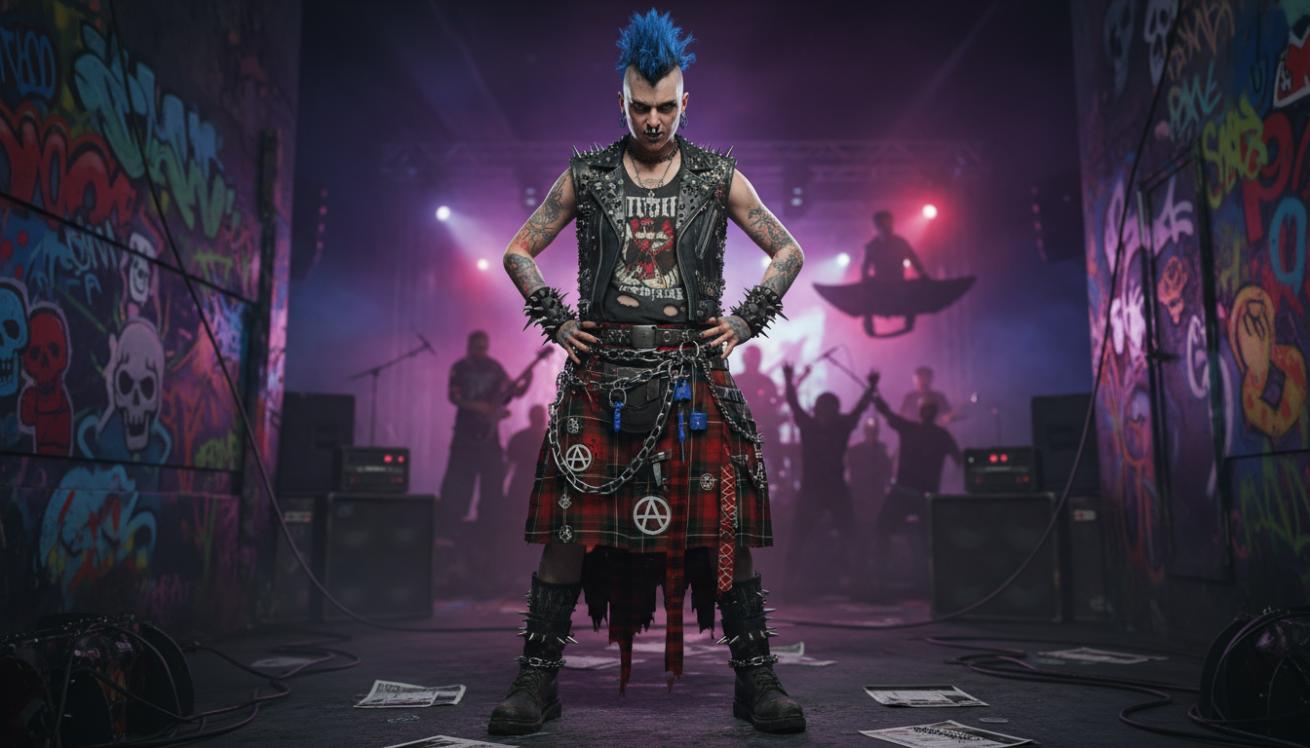
And that’s when the kilt, traditionally a piece of formal attire, was taken and redefined by punk rockers. No longer was the kilt seen as something ceremonial or rooted in heritage. It became a symbol of anti-establishment rebellion. Punk rockers didn’t just wear the kilt—they customized it. The kilt was altered, deconstructed, and paired with all the rough, rebellious elements that punk culture valued: chains, studs, torn fabric, and spikes.
Why the Punk Kilt is the Ultimate Symbol of Rebellion
Now that we know where the punk kilt comes from, it’s time to explore what makes it such a powerful symbol of rebellion.
A. It’s Not Just Clothing—It’s a Statement
The punk kilt isn’t just something you throw on without thinking. It’s a declaration of nonconformity. Wearing a punk kilt says, “I am not part of the mainstream. I do not follow your rules.” In a world where fashion often dictates how you should look and behave, the punk kilt flips the script. It’s a fuck-you to the establishment, to societal norms, and to any traditional rules about what you’re “supposed” to wear.
The punk kilt breaks all the rules. It’s messy, it’s loud, and it’s unapologetically different. It’s punk fashion at its best—raw, aggressive, and absolutely rebellious. And that’s precisely why it works. It’s not about following trends; it’s about creating your own rules. In the world of punk, the kilt becomes a uniform for those who refuse to fit into society’s neat little boxes.
B. Challenging Gender Norms
One of the most powerful aspects of the punk kilt is its ability to cross gender boundaries. Traditionally, kilts were worn by men in Scotland. But in the world of punk, fashion is meant to break down boundaries, not uphold them. Punk is a place where gender norms are questioned and often discarded. The punk kilt is part of that rebellion. It doesn’t matter whether you’re a man or a woman—if you’re a punk, you can wear the kilt.
The punk kilt is for anyone who rejects the idea of clothing being assigned based on gender. It’s for those who believe in gender fluidity and the freedom to express themselves authentically. In punk culture, the kilt isn’t confined to any specific gender role—it’s a garment that anyone can make their own, further cementing its status as a symbol of rebellion against conventional society.
C. A Visual Expression of Punk Ethics
At its core, punk is about rejecting the status quo, and the punk kilt is the perfect representation of this. It embodies the DIY mentality of punk culture, where everything is customizable and adaptable. The kilt, once a formal and structured garment, is torn apart and rebuilt to suit the punk aesthetic.
The punk kilt is often distressed, modified, and personalized—it might be studded with spikes or adorned with patches that express personal views or political beliefs. This garment becomes a canvas for individual expression. It’s not just about looking different; it’s about showing the world who you are, what you stand for, and what you’re fighting against.
The punk kilt, in all its rugged glory, is a visual scream that says, “I don’t care about your rules.” It’s about rejecting the prescribed ways of life and creating something truly personal and authentic.
Punk Icons Cementing the Kilt’s Rebellion
No exploration of the punk kilt would be complete without acknowledging the punk icons who made it part of the punk wardrobe.
A. Punk Rockers and the Kilt
In the early days of punk rock, bands and artists weren’t just interested in making music—they were interested in creating a statement with everything they did, including their fashion choices. The punk kilt was embraced by punk rockers who saw it as the perfect garment to amplify their anti-establishment message.
Sid Vicious, for example, became one of the most iconic punk figures known for wearing a kilt. Vicious wasn’t interested in adhering to traditional ideas of masculinity or fashion. He made the kilt rebellious—turning it into an integral part of his iconic punk look.
Other punk bands, such as The Sex Pistols, The Clash, and The Exploited, incorporated the kilt into their stage costumes and everyday style. In punk culture, the kilt wasn’t just a garment—it was part of the uniform. It became synonymous with punk rock’s ethos of rejecting the norm and fighting against the establishment.
B. The Punk Kilt as Political Protest
Punk isn’t just about fashion—it’s about activism. Many punk rockers used their platform to raise awareness about political and social issues. The punk kilt, worn at political rallies and protests, became a tool for defiance and protest. Whether it was standing against government corruption, championing personal freedom, or fighting for social justice, the punk kilt was often worn as a sign of resistance.
In this way, the punk kilt isn’t just a fashion statement—it’s a weapon of protest. It’s worn by those who don’t just want to look different but want to make a statement about the world they live in.
Modern Punk Kilts—Still the Badge of Rebellion
Even today, the punk kilt remains as much a symbol of rebellion as it did in the 1970s. In fact, the punk kilt is more relevant than ever.
A. The Punk Kilt in Contemporary Fashion
Modern punk designers and alternative fashion brands continue to incorporate the punk kilt into their collections as an essential element. Today’s punk kilt might come in a variety of fabrics—some still use traditional tartan patterns. In contrast, others experiment with leather, denim, or other unconventional materials.
The beauty of the punk kilt lies in its adaptability. It can be styled to fit different subcultures—whether you’re into metal, goth, or streetwear. The punk kilt remains an essential piece of rebel fashion, one that allows wearers to express their individuality while staying true to punk’s anti-establishment roots.
B. The Punk Kilt in Pop Culture
The punk kilt’s influence extends far beyond underground scenes and punk concerts. It has made appearances in mainstream pop culture, from music videos to fashion runways. Celebrities and social media influencers have adopted punk aesthetics, and the punk kilt has become a key element of their outfits. Whether worn by musicians, actors, or fashion icons, the punk kilt continues to break barriers and challenge mainstream fashion norms.
How to Wear Your Punk Kilt and Make Your Own Statement
So, you’re ready to rock the punk kilt? Here’s how to wear it with confidence:
A. Punk Kilt Styling Tips
- Pair your punk kilt with combat boots or chunky Dr. Martens to complete the rebellious look.
- Layer your kilt with a band tee, leather jacket, or torn shirt to channel the authentic punk aesthetic.
- Accessorize with spikes, chains, safety pins, and DIY patches for a personalized touch.
B. DIY Punk Kilt Customization
- Use fabric paint, iron-on patches, and studs to add a personal flair to your punk kilt.
- Add a chain belt or spiked collar for an extra touch of attitude.
The punk kilt is all about creating your own rebellion. The more customized it is, the more it embodies your individuality.
Conclusion:
The punk kilt is more than just an article of clothing—it’s a badge of rebellion. It challenges tradition, breaks gender norms, and proudly displays anti-establishment values. Whether you’re wearing it for its cultural significance, its aesthetic power, or its rich history of rebellion, the punk kilt remains an iconic symbol of punk’s unwavering commitment to individuality, defiance, and freedom.
Wear your punk kilt with pride, and let the world know that you’re not following the rules. You’re making your own.
FAQ’s:
The punk kilt differs from a traditional kilt by incorporating elements of punk fashion, such as chains, studs, spikes, and DIY customizations. While the conventional kilt is a symbol of Scottish heritage, the punk kilt represents rebellion, nonconformity, and anti-establishment values.
The punk kilt represents rebellion because it transforms a traditional garment into a statement of defiance. It challenges both cultural heritage and conventional fashion, aligning with punk’s ethos of breaking societal norms and rejecting conformity.
Punk rockers like Sid Vicious from the Sex Pistols popularized the punk kilt by pairing it with other punk staples, such as leather jackets, band tees, and accessories like spikes and chains. They redefined the kilt, making it a symbol of resistance and nonconformity.
The punk kilt is unisex and can be worn by both men and women. Punk fashion has always embraced gender fluidity, and the punk kilt continues that tradition, allowing anyone who identifies with punk culture to wear it as a symbol of rebellion and individual expression.
You can personalize a punk kilt by adding patches, studs, spikes, or chains to it, or even painting it with fabric paint. The punk kilt is all about individuality, so feel free to customize it to reflect your personal style and beliefs, staying true to the DIY ethos of punk fashion.