History and Traditions of the Highland Games

The Highland Games are among Scotland’s most enduring cultural traditions. They are more than athletic contests or festive gatherings; they are a symbol of identity, heritage, and community for Scots at home and abroad. Over centuries, these Games have evolved from informal clan competitions into internationally recognized celebrations of Scottish culture. Exploring their origins, signature events, and lasting impact reveals why they continue to hold such a respected place in Scotland’s cultural story.
Origins of the Highland Games
The earliest roots of the Highland Games can be traced back more than a thousand years. Historians often connect their origins to clan gatherings, where chiefs would assemble their people for military preparation, decision-making, and friendly rivalry. During these early gatherings, strength and skill were essential qualities. Men competed in activities that tested their readiness for the physical demands of life in the Highlands—running, lifting, throwing, and wrestling.
Some legends even suggest that ancient Celtic traditions influenced the Games and that similar contests were held to find the fastest messenger or the strongest warrior. While exact historical records are limited, it is clear that competition played a key role in clan society. These early versions of the Highland Games became a way to demonstrate physical ability while strengthening community bonds.
Evolution Through the Centuries
As Scotland moved through the medieval era, the Games continued to develop. Clan chiefs often organized events to celebrate victories, honor special guests, or showcase their people’s talents. The competitions were not only displays of physical power but also a reflection of the social structure of the Highlands. Athletes who excelled earned respect and recognition, sometimes even positions within the clan.
The Games were challenged during the 18th century when the wearing of Highland dress and the gathering of clans were restricted after the Jacobite uprisings. Despite these pressures, the spirit of the Games endured. Communities continued to practice traditional sports and cultural activities quietly, preserving their customs for future generations.
In the 19th century, the Highland Games experienced a strong revival. With renewed interest in Scottish culture during the Victorian era, the traditions resurfaced with even greater enthusiasm. The establishment of organized Games in towns like Braemar helped transform the events into formal competitions. This revival was instrumental in shaping the modern Highland Games, giving them structure, rules, and the cultural visibility they enjoy today.
Signature Athletic Events
The athletic events at the Highland Games are what most people associate with the tradition. They are unique, physically demanding, and deeply connected to Highland culture.
The caber toss is the most iconic. In this event, athletes lift and flip a large wooden log—usually around 16 to 20 feet long. The goal is not height or distance but precision. The caber must be tossed so it lands perfectly end-over-end, symbolizing control and technique more than raw power.
Another staple is the stone put, an early form of the modern shot put. Instead of a metal shot, athletes throw a large stone, echoing the practical strength required in everyday Highland life. The hammer throw is also an essential part of the Games. Still, unlike the Olympic version, athletes compete with their feet firmly planted, using strength and timing to propel the hammer as far as possible.
Tug-o-war is a crowd favorite. This team event highlights unity and teamwork—qualities valued within Highland communities. While it may appear straightforward, it is highly competitive and requires strategy, balance, and collective determination.
These athletic contests are not merely sports; they are a living connection to the physical challenges faced by people in historical Highland society.
Music, Dance, and Cultural Performances
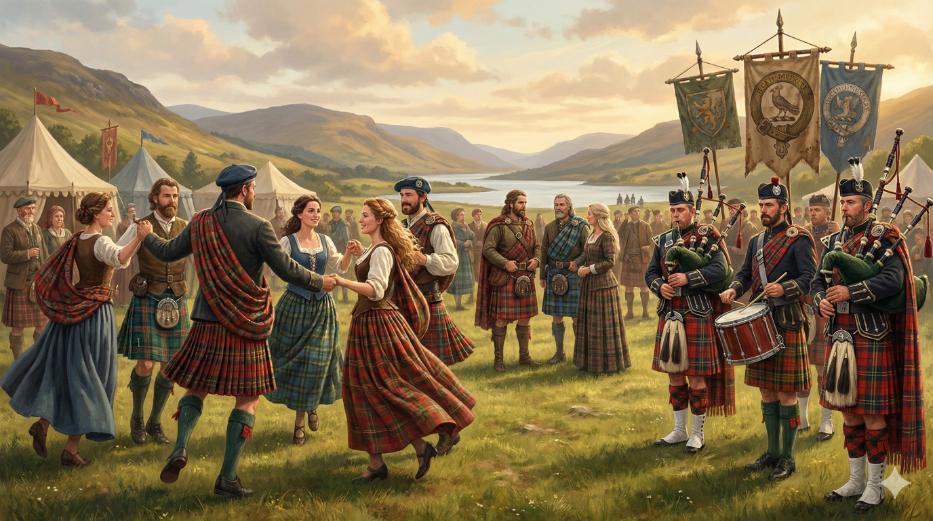
The Highland Games are not only about strength—they are equally rich in music, dance, and cultural expression. Bagpipes are central to the atmosphere. Pipe bands march through the grounds, creating a powerful sound that instantly evokes Scottish identity. Their music sets the rhythm for the day and signals the beginning of important events.
Highland dancing is another long-standing tradition woven into the Games. Dancers perform intricate steps with grace and precision, often competing for awards. Dances such as the Highland Fling and the sword Dance have deep historical roots and were initially performed by warriors to demonstrate agility and concentration. Today, they remain symbolic expressions of cultural pride.
Storytelling, family pride, and clan representation also play significant roles. Many participants and spectators attend the Games wearing clan tartans, strengthening the sense of history and belonging. These cultural performances help ensure that the Highland Games are not only athletic spectacles but complete celebrations of Scottish heritage.
The Role of the Kilt and Tartan Identity
No element of Highland identity is more recognizable than the kilt. At the Highland Games, the kilt is more than traditional attire—it is a symbol of ancestry and cultural pride. Historically, Scottish clans used tartan patterns to represent family identity, and each design carried meaning. Wearing a kilt with one’s clan tartan became a way to honor that lineage.
During the Games, kilts are everywhere. Athletes compete in them, musicians and dancers perform in them, and spectators proudly display their colors. This consistent presence reinforces the cultural power of the tartan and highlights its enduring importance in Scottish tradition.
While modern kilts may be made with updated materials or styles, the connection to clan history remains strong. The kilt helps bridge the past and present, reminding everyone at the Games of the culture they are celebrating.
Highland Games Around the World
Although the Highland Games originated in Scotland, they have grown into global events. As Scottish communities migrated, especially during the 19th and early 20th centuries, they carried their customs with them. Today, large Highland Games gatherings take place in the United States, Canada, Australia, and several European countries.
In the United States, the Games have become major cultural festivals, drawing thousands of visitors each year. They often include additional elements such as Scottish food stalls, educational exhibits, parades, and clan tents where families trace their ancestry. These international Games play a key role in preserving Scottish identity abroad, allowing Scottish descendants to reconnect with their heritage and share it with others.
Community, Heritage, and Modern Significance
The most important aspect of the Highland Games is their connection to community and heritage. For many Scots, the Games are an annual celebration that brings families and friends together. They offer a space where history, tradition, and cultural pride are openly and joyfully expressed.
The Games also contribute to Scotland’s tourism industry, attracting visitors from around the world. People travel specifically to experience the atmosphere, watch the competitions, and enjoy the cultural displays. This interest strengthens Scotland’s global identity and supports local communities economically.
Even as times change, the Highland Games continue to thrive because they maintain a balance between preserving tradition and welcoming new generations. They are a reminder of resilience, cultural identity, and the value of shared celebration.
Conclusion
The Highland Games have a long and meaningful history rooted in community, strength, and cultural pride. From their ancient origins in clan society to their modern global presence, they offer a powerful connection to Scotland’s past while remaining a vibrant part of its present. Through athletic contests, music, dance, and the display of tartans and kilts, the Games keep Scottish traditions alive in dynamic, memorable ways. They stand today as a lasting symbol of heritage and the enduring spirit of the Highlands.