Ancient Scots Clothing Compared to Modern Highland Dress – Difference

Scottish clothing has always carried meaning far beyond fabric and stitching. It reflects climate, culture, clan identity, and the evolution of Highland life across centuries. When you compare what ancient Scots once wore with the Highland dress seen today, the transformation is striking. The journey from rough, practical garments to the polished, ceremonial outfits we now recognize tells a powerful story of heritage, resilience, and identity.
Clothing of the Ancient Scots
Harsh weather, rugged landscapes, and constant movement shaped life in the ancient Scottish Highlands. Clothing had to work with the climate, not against it. Early Highlanders mainly relied on wool, which was warm, durable, and fairly water-resistant. Animal skins were sometimes used for cloaks or footwear, especially during winter. Dyes came from natural sources such as roots, bark, and plants.
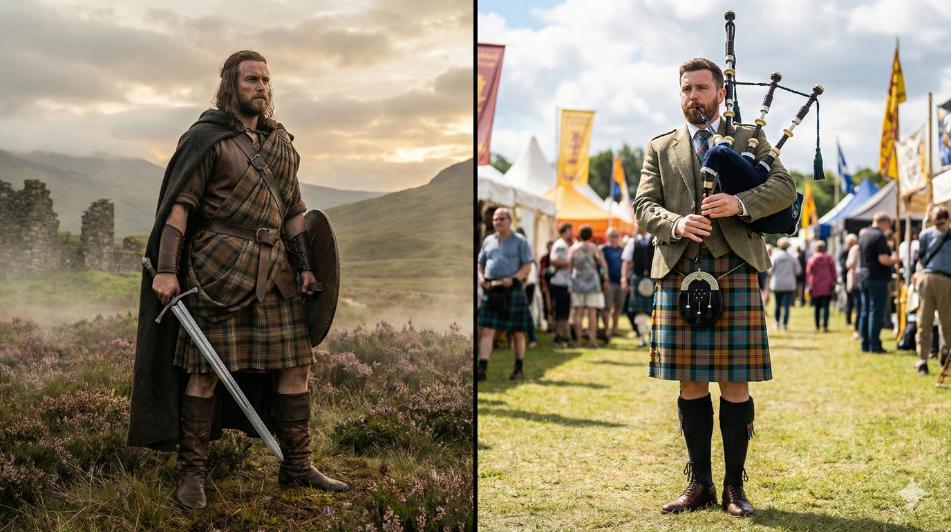
The most iconic piece of ancient Highland clothing was the Great Kilt, or Feileadh Mòr. Unlike the modern kilt, which is carefully tailored, the Great Kilt was essentially a long, wide piece of wool, often up to 6 meters in length. Highlanders wrapped it around their waist, pleated it by hand each time, and secured it with a belt. The upper half could be draped over the shoulder or used as a cloak, blanket, or hood, depending on the weather. This flexibility made it invaluable in daily life.
Early tartan patterns did exist, but they were not tied to clans the way they are today. Instead, they were created based on what dyes and materials were available in the region. Highlanders chose colors for function rather than symbol: darker shades blended into the landscape, making them useful for hunting or moving across terrain. Clothing was a tool, not a statement.
The ancient Highland wardrobe was straightforward, durable, and suited to Survival. Every piece had a purpose, and nothing was worn purely for decoration.
Transition Through the Medieval and Early Modern Periods
As Scotland moved through the medieval era, its clothing began to shift. Weaving techniques improved, trading expanded, and contact with other cultures introduced new ideas and materials. The basic wool structure remained, but patterns grew more varied, and clothing became slightly more tailored.
Clans played a significant role in shaping how people dressed. Even though clan-specific tartans weren’t formally organized yet, each region developed its own styles based on common resources and preferences. Warriors, hunters, and farmers often wore versions of the Great Kilt. Still, accessories such as simple leather sporran or belts became more common.
The Jacobite uprisings of the 18th century brought significant change. After the 1745 rebellion, the British government passed the Dress Act of 1746, which banned Highland dress for ordinary people. Kilts, tartans, and other Highland garments were seen as symbols of rebellion. Only those serving in Highland regiments were allowed to wear them.
Although the ban was lifted in 1782, this period marked a turning point. Highland dress became more symbolic, representing pride and identity rather than daily practicality. The restrictions pushed the tradition into a new chapter where clothing became more closely tied to heritage and culture.
The Birth of Modern Highland Dress
The modern Highland dress that most people recognize today began to take shape in the 18th and 19th centuries. The tailored kilt, or Feileadh Beag, replaced the large wrapped kilt. This new style was stitched with permanent pleats, making it much easier to wear. It was shorter, lighter, and more comfortable for marching and ceremonial events.
The Victorian era played a crucial role in the transformation. Queen Victoria developed a deep fascination with Scottish culture, particularly after visiting the Highlands and spending time at Balmoral Castle. This royal admiration brought Highland dress into the spotlight. It became fashionable, romanticized, and strongly associated with clan symbolism.
During this period, tartans were officially cataloged and linked to specific clans. Many tartans were even designed during the 19th century rather than ancient times, though they were presented as historical patterns. This shift gave modern Highland dress a structured identity that ancient Scots never used.
Modern Highland clothing evolved into a blend of tradition and ceremonial elegance. It was no longer worn daily but reserved for celebrations, gatherings, and expressions of heritage.
Key Differences Between Ancient and Modern Dress
The contrast between ancient clothing and modern Highland dress is significant, reflecting centuries of cultural change.
Ancient Scots wore garments primarily for Survival. The Great Kilt was loose, adaptable, and handmade each time it was worn. It served as clothing, bedding, and shelter all in one. Modern kilts, by contrast, are precisely tailored. They are sewn with fixed pleats and fitted to the wearer’s measurements, designed for a clean appearance rather than multi-purpose use.
The function of clothing changed dramatically. Ancient Highlanders wore their kilts every day. Today, Highland dress is ceremonial—used for weddings, Highland Games, cultural events, and celebrations of Scottish identity.
Tartan’s meaning also evolved. Early tartans reflected local plant dyes and regional traditions, not clan membership. Modern tartans are clearly defined, officially registered, and represent families, districts, or organizations.
Accessories highlight another difference. Ancient Scots had minimal extras—perhaps a belt, basic shoes, or a small leather pouch. Modern Highland dress includes jackets, sporrans, ghillie brogues, kilt pins, belts, hose, flashes, and more. These elements give the outfit a refined, structured appearance that ancient Highlanders would not recognize.
Symbolism is the most significant difference. Ancient clothing was functional; modern Highland dress is cultural, emotional, and symbolic.
Modern Highland Dress Today
Today’s Highland dress has become part of global Scottish identity. The modern outfit includes the kilt, sporran, jacket, shirt, belt, hose, and brogues. Depending on the occasion, people may wear lighter daywear or full formal attire with ornate accessories.
Kilts are now made in many styles. Traditional wool tartan remains the most respected, but modern variations such as utility kilts, sports kilts, and fashion kilts have grown in popularity. These designs blend comfort, practicality, and contemporary taste while still reflecting the spirit of Highland dress.
Highland dress is still worn at weddings, Burns Night celebrations, ceilidhs, and Highland Games. Even Scots living abroad wear kilts to mark cultural pride. This ongoing connection keeps the heritage alive, linking modern communities to centuries of history.
Cultural Importance and Preservation
Both ancient and modern Scottish clothing hold essential cultural value. Museums throughout Scotland preserve original garments, showing how early Highlanders lived and dressed. Clan societies and Scottish heritage groups document tartans, create educational resources, and support traditional craftsmanship.
In many ways, the modern kilt is a tribute to the past. It reflects centuries of tradition while adapting to contemporary life. It carries forward the memory of the ancient Great Kilt, even though the design has changed dramatically.
The global interest in Highland fashion continues to grow. From Scottish diaspora communities to tourists drawn to tartan culture, the symbolism of Highland dress remains powerful. It stands as a reminder of Scotland’s heritage, identity, and enduring pride.
Conclusion
The evolution of Scottish clothing from ancient Highland garments to modern ceremonial dress reflects a long journey of adaptation, Survival, and cultural pride. Ancient Scots relied on the Great Kilt for warmth, mobility, and practicality. Today’s Highland dress, with its tailored kilts and detailed accessories, serves as a symbol of identity and tradition. Both forms of dress carry their own stories, and together they show how Scotland’s heritage has remained strong through centuries of change.